The Evolution of Video Standards (Part 5) : The Analog Video Signal
After covering the evolution of broadcast standards, this episode dives into the signal itself. Using the PAL system as a reference, we break down how analog video is constructed from fields, lines, and timing sequences inside a CRT display. We explore how a video line is structured, including sync, porch, and active video, along with field and frame timing.
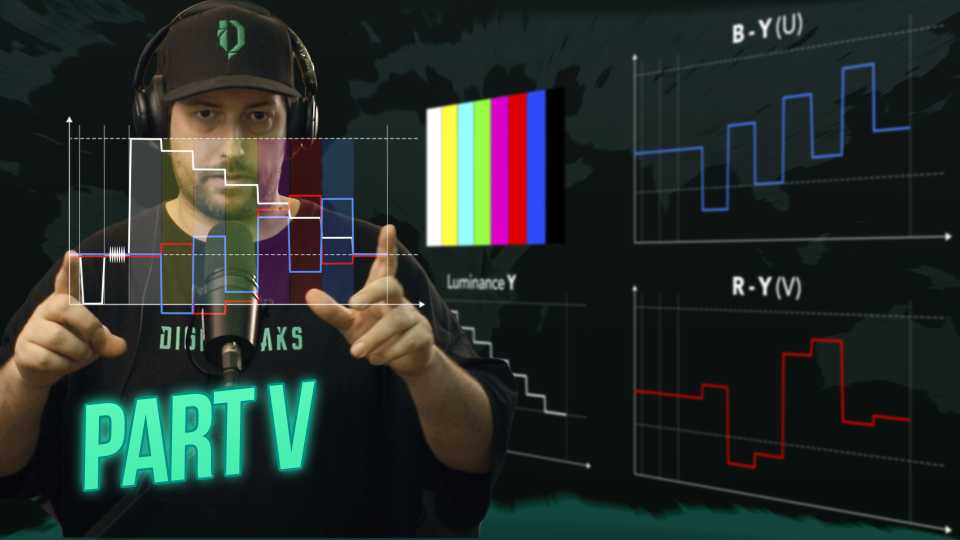
The episode also explains luminance and chrominance (Y, U, V), how RGB is separated and reconstructed, and how color spaces define the relationship between brightness and color, including why green is derived instead of transmitted directly. We also cover color encoding, subcarrier modulation, and the role of the color burst, as well as how interlacing allows two fields to form a complete image. Comparisons with NTSC and SECAM highlight different approaches to color transmission. A technical look at how brightness, color, and synchronization are combined into a single analog waveform.